Ball Conveyor Pitch you might ask? When exploring ball transfer tables, terms like ‘diamond pitch,’ ‘elongated pitch,’ and ‘square pitch’ describe how ball transfer units are arranged on the table surface. Each pitch pattern offers unique characteristics that influence the functionality and performance of the ball transfer table. Therefore, let’s explore each pitch type:

Diamond Pitch
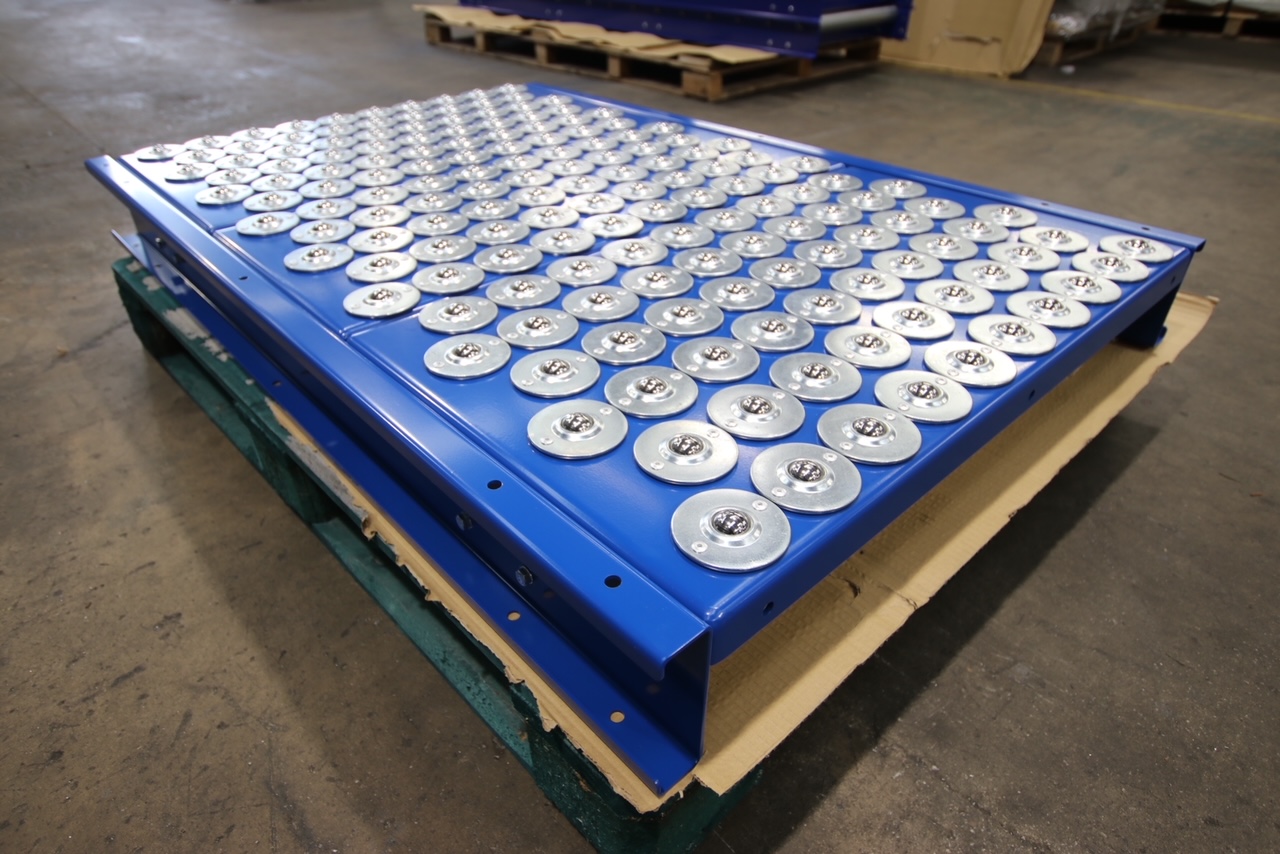
In a diamond pitch setup, ball transfer units form a diamond-shaped pattern on the table surface in a staggered layout. This arrangement maximises the number of units per square foot. Consequently, it boosts load capacity. The increased number of ball transfer units offers higher stability and load-bearing capabilities. As a result, diamond pitch is ideal for applications requiring high stability and load capacities. Therefore, it is suitable for heavy-duty material handling.

Elongated Pitch
Elongated pitch arranges ball transfer units in a rectangular or elongated pattern on the table surface. This configuration features longer ball transfer paths for smoother movement along the table’s extended sides. Thus, it is perfect for handling long or narrow objects. The elongated pitch ensures these objects can glide across the table with minimal friction. Consequently, it enhances efficiency in handling items such as pipes, beams, or elongated crates.

Square Pitch
Square pitch organises ball transfer units in a square grid pattern on the table surface. Units are evenly spaced both horizontally and vertically. This pattern ensures equal support in all directions. It allows for versatile and flexible multidirectional movement of objects. The square pitch is particularly useful in applications where objects need to be moved, rotated, and repositioned frequently. Its balanced configuration supports a wide variety of item sizes and shapes. Therefore, it is a versatile choice for many different industries.

Choosing the Right Ball Conveyor Pitch
Selecting the appropriate pitch pattern depends on specific application requirements. Consider the following factors when choosing the right pitch:
- Object Size and Shape: Larger or uniquely shaped items may benefit from the balanced support of a square pitch. On the other hand, elongated items might be better suited to an elongated pitch.
- Weight: Heavier items require the enhanced stability and load-bearing capacity of a diamond pitch.
- Movement Requirements: If items need frequent repositioning, the flexibility of a square pitch is advantageous. For smoother, longer transfers, an elongated pitch offers the best performance.
- Material Handling Efficiency: Optimising efficiency depends on aligning the pitch pattern with the operational needs and handling characteristics of your materials.
Understanding the differences between diamond, elongated, and square pitch configurations empowers users to make informed decisions. Consequently, you can optimise efficiency in material handling operations. By selecting the right pitch, you can enhance the performance of your ball transfer tables. This ensures they meet the specific demands of your applications.
Final Thoughts on Ball Conveyor Pitch
Choosing the correct ball conveyor pitch and shape for your ball transfer tables is crucial for optimal performance in material handling. Each pitch type—diamond, elongated, and square—offers distinct advantages tailored to different handling needs. Assessing your specific requirements will help you select the best configuration. This improves stability, load capacity, and overall efficiency in your operations.
If you need further assistance or have any questions about selecting the right ball conveyor pitch for your application, feel free to contact us. Our experts are ready to help you find the perfect solution for your material handling needs.