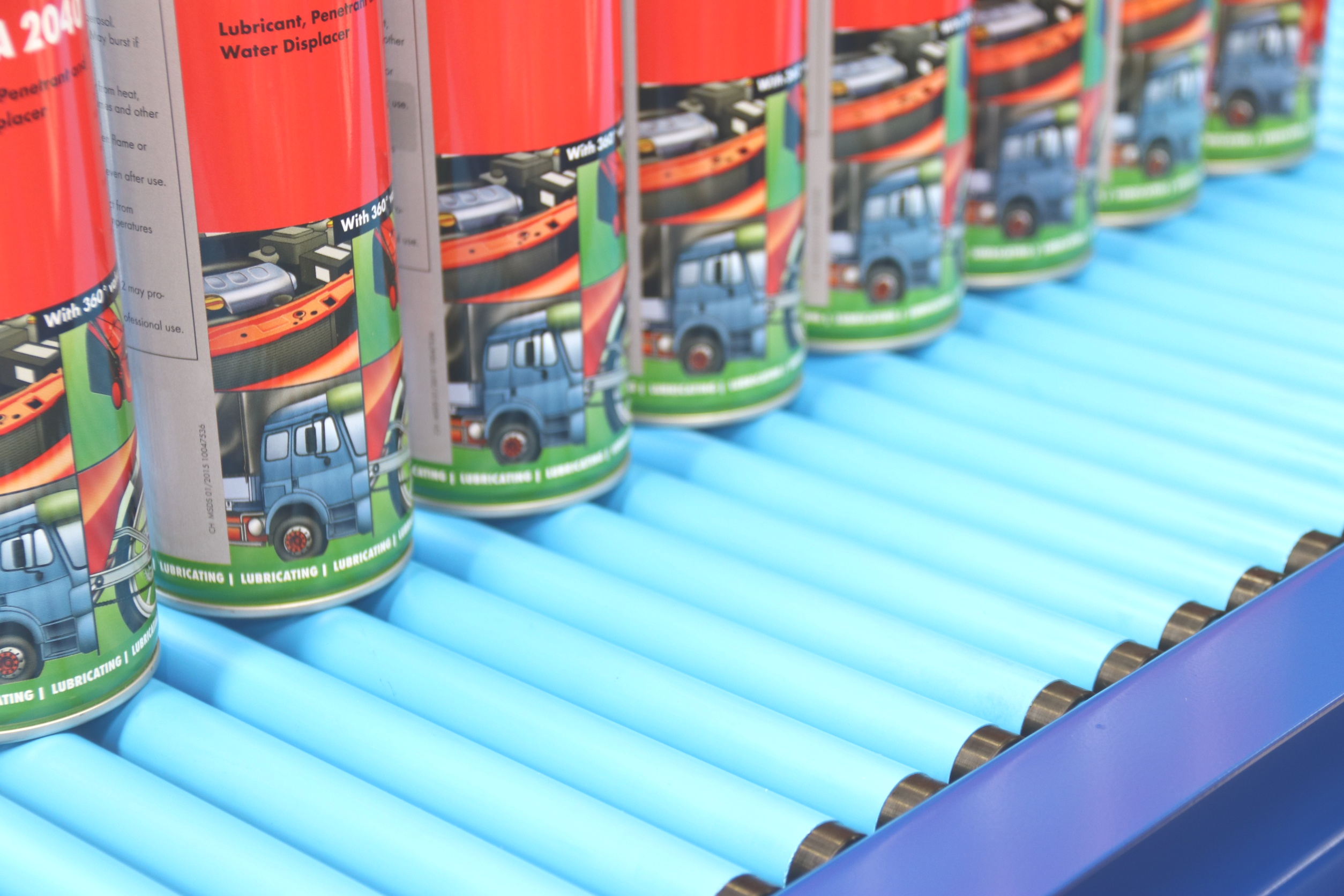
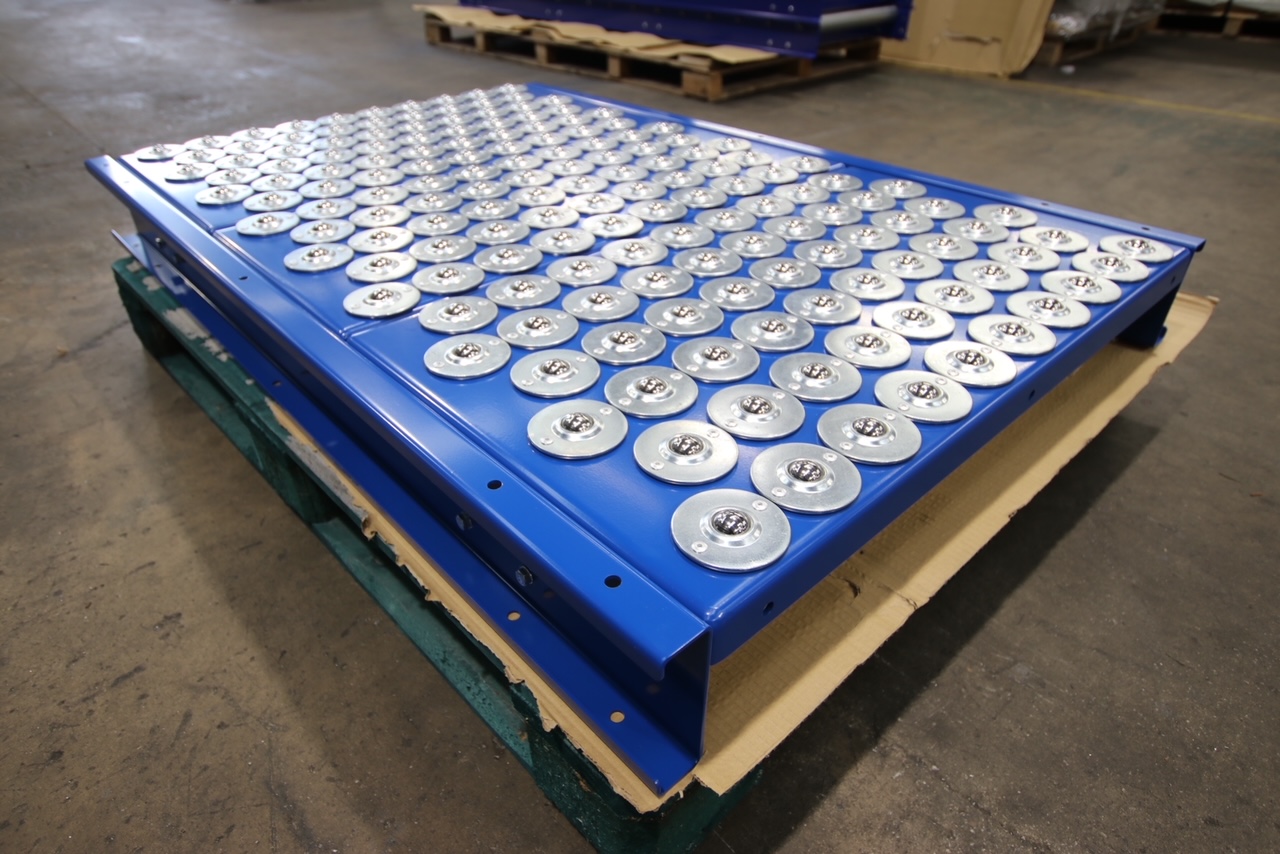
Roller pitch is crucial when designing a gravity roller conveyor system. Selecting the appropriate roller pitch, or roller centres, directly affects the efficiency, stability, and safety of your conveyor system. By following a few straightforward principles, you can ensure that your conveyor will reliably support and transport your products. This blog will guide you through the process of choosing the correct roller pitch, focusing on the key rule of thumb: there should always be three rollers supporting the product at any one time, and these rollers must be capable of supporting the product’s weight.
Understanding Roller Pitch for Gravity Conveyors
Roller pitch, or roller centres, refers to the distance between the centres of two consecutive rollers. This distance is crucial because it determines how many rollers will be under the product at any given moment. To ensure stability and smooth operation, it is recommended that a minimum of three rollers support the product simultaneously. This guideline helps distribute the load evenly, prevents sagging, and minimises the risk of the product tipping or falling between rollers.
Calculating the Correct Roller Pitch
To calculate the correct roller pitch, you can use a simple formula:
Pitch=Product Length3
For example, if you have a product that is 300mm in length, the calculation would be:
300 mm÷3=100 mm
Thus, the roller pitch should be 100mm. This ensures that at least three rollers will always be in contact with the product, providing consistent support.
Considering Weight Capacity of Rollers
While calculating the pitch is relatively straightforward, it’s also essential to consider the weight capacity of the rollers. Each roller must be able to support its share of the product’s weight. If your product is heavy, you may need to choose rollers with a higher weight capacity or adjust the pitch to ensure adequate support.
Practical Example of Roller Pitch Calculation
Let’s say you have a product that is 450mm long and weighs 45kg. First, calculate the roller pitch:
450 mm÷3=150 mm
This means the roller pitch should be 150mm to maintain three rollers under the product. Next, ensure the rollers can support the product’s weight.
Include a safety factor when determining the required capacity of the rollers. A common safety factor used in engineering is 1.5. This means the rollers should support 1.5 times the actual load to account for dynamic forces, uneven loading, and potential wear over time.
For your 45kg product, applying a 1.5 safety factor:
45 kg×1.5=67.5 kg
Therefore, the combined capacity of the three rollers should be at least 67.5kg. If each roller supports up to 20kg, three rollers can support up to 60kg, which is insufficient considering the safety factor. You would need rollers that support at least:
67.5 kg÷3=22.5 kg
In this case, you would need to select rollers with a capacity of at least 22.5kg each. If the available rollers can only support 20kg each, you might need to reduce the pitch further to increase the number of rollers supporting the product at any time or opt for higher-capacity rollers.
Additional Considerations for Optimising Roller Conveyors
Beyond selecting the appropriate roller pitch and weight capacity, several other factors can enhance the performance and efficiency of your gravity roller conveyor:
- Roller Material and Surface: The material and surface finish of the rollers can impact the friction between the rollers and the load. Choose roller materials that provide the necessary grip and durability based on the characteristics of the products being transported.
- Frame Design and Construction: Ensure the conveyor frame is robust enough to handle the intended load capacity and any potential impacts or stress during operation.
- Roller Diameter: The diameter of the rollers can affect the ease of movement and support provided to the load. Larger diameter rollers may offer better support for heavier loads and contribute to smoother transportation.
- Roller Bearings: High-quality bearings are essential for smooth and reliable operation. Consider sealed or shielded bearings to minimise the risk of contaminants affecting the rollers’ performance.
- Maintenance and Accessibility: Design the conveyor with easy maintenance in mind. Accessibility to rollers and other components for inspection, cleaning, and potential replacement is crucial for long-term reliability.
- Integration with Other Conveyor Systems: Ensure compatibility and seamless integration with other types of conveyors or equipment if the gravity roller conveyor is part of a larger material handling system.
- Environmental Considerations: Choose materials and components that can withstand specific environmental conditions (e.g., extreme temperatures, moisture) to ensure longevity and reliability.
By taking a holistic approach to conveyor design and considering these additional factors, you can create a system that not only has an appropriately chosen roller pitch but is also optimised for the specific needs and challenges of your application.
Conclusion
Choosing the correct roller pitch for a gravity roller conveyor is crucial for ensuring the stability and safety of your material handling process. By adhering to the rule of thumb that at least three rollers should support the product at any time and considering the weight capacity of the rollers with a 1.5 safety factor, you can design a conveyor system that meets your operational needs. With careful planning and regular maintenance, your gravity roller conveyor will provide reliable performance and contribute to the efficiency of your material handling operations.
Contact Us for More Information
If you need further assistance or have any questions about selecting the correct roller pitch for your gravity roller conveyor, please do not hesitate to contact us. Our team of experts is here to help you make the best decisions for your specific needs and ensure your conveyor system operates smoothly and efficiently. Whether you require detailed guidance or additional information on our products and services, we are always ready to provide the support you need. Feel free to reach out to us today, and let us assist you in optimising your material handling solutions.