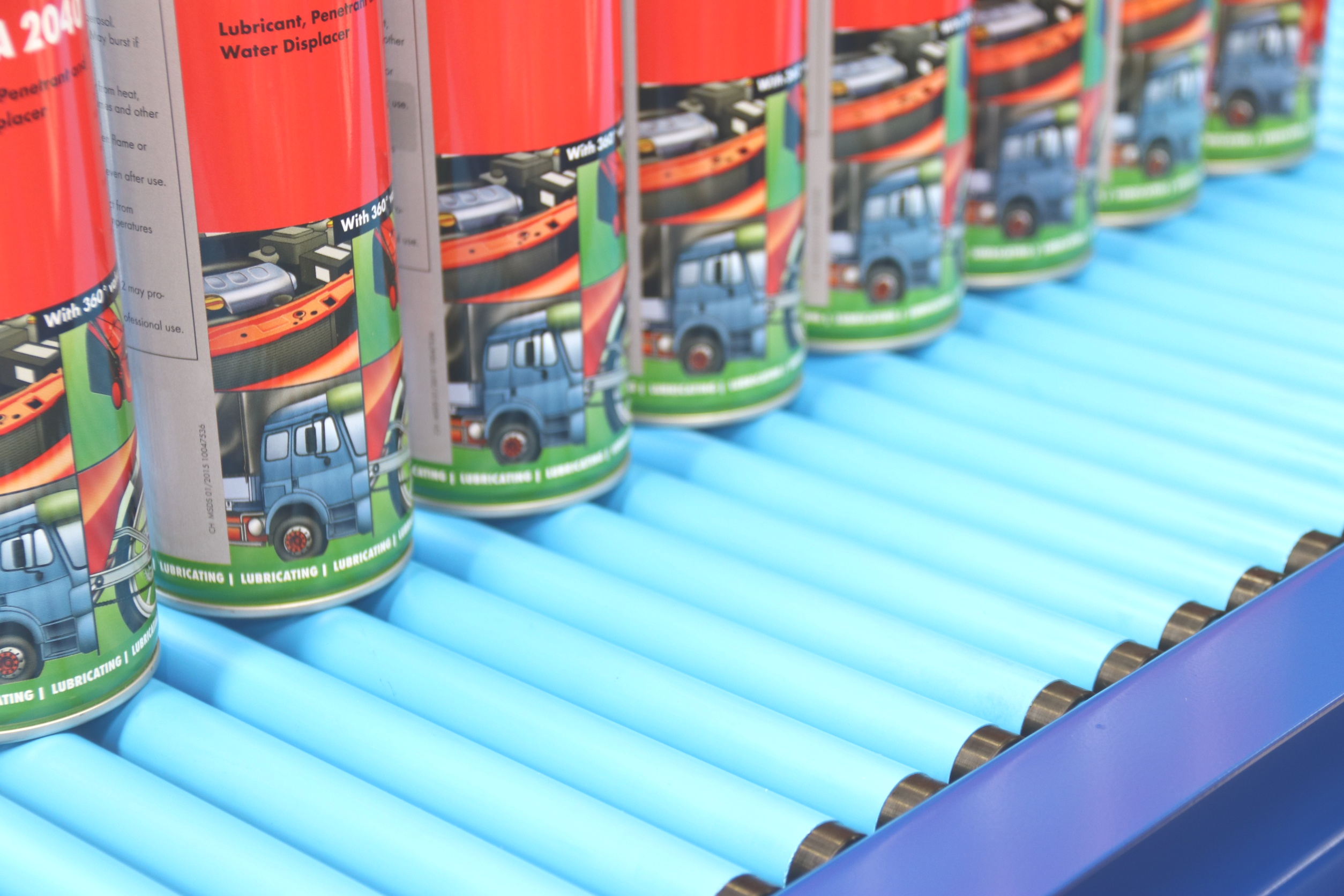
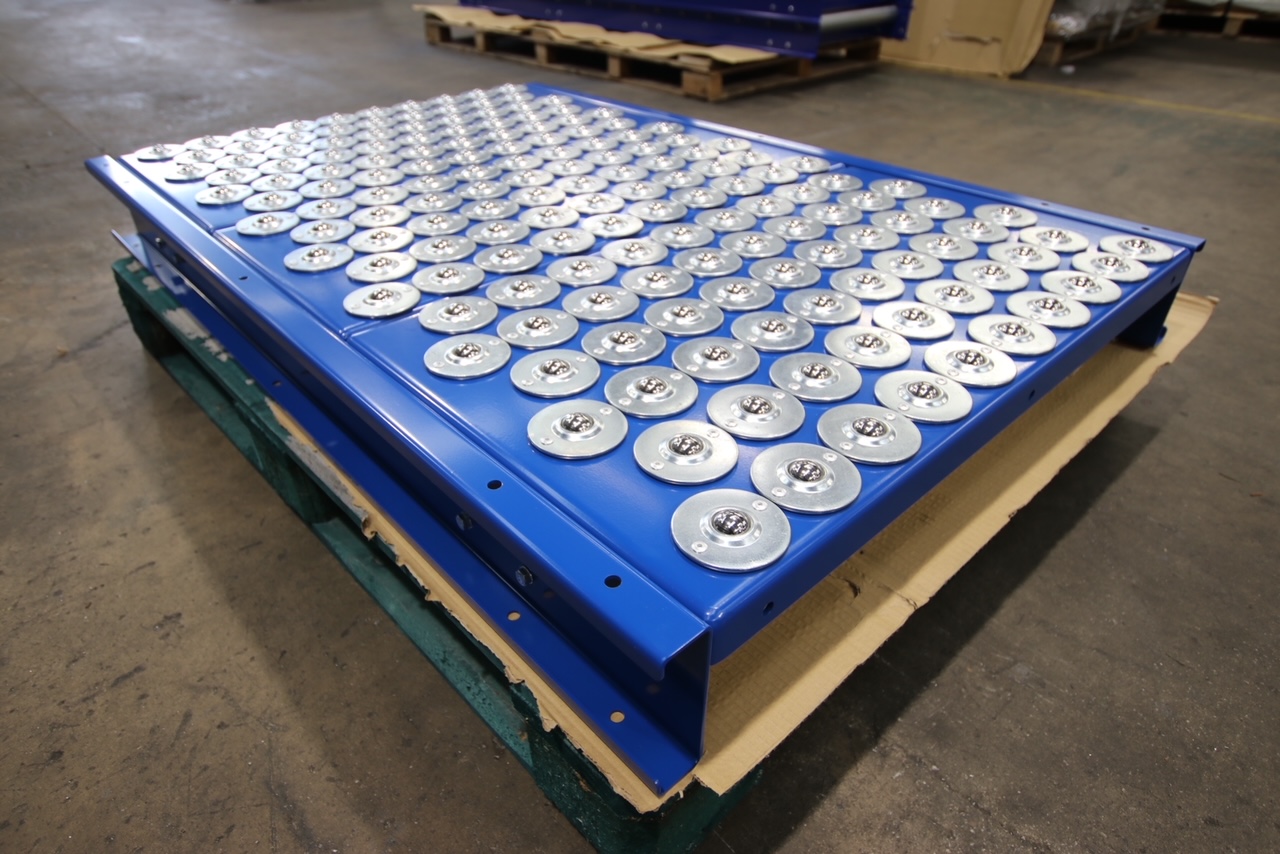
Choosing the right angle for a gravity conveyor involves considering various factors to ensure optimal performance and efficiency. Selecting the optimal gravity decline is crucial for the smooth operation of your conveyor system.
Product Weight:
First, ensure that the product weight falls within the capacity of three rollers with a Uniform Distributed Load (UDL). This step ensures the conveyor can handle the load without risking damage or inefficiency. By selecting the optimal gravity decline, you can maintain a safe and effective load transfer.
Product Type:
The type of product being conveyed also plays a critical role. Loads should have a smooth and firm surface for effective conveying. Irregular or soft surfaces may cause issues with the movement of the product along the conveyor. Considering the type of product helps in selecting the optimal gravity decline for your specific needs.
Conveyor Supports:
Consider the types of supports available for the conveyor. Options include adjustments from threaded swivels, drop or sliding leg-inserts, or wide out-rigged supports. These adjustments help achieve the desired conveyor angle and stability. Ensuring proper support is essential for selecting the optimal gravity decline.
For products to smoothly roll on a gravity feed conveyor line, the conveyor must be inclined downward. The recommended pitch ranges from 50mm to 200mm per 3m section. This specific pitch depends on several factors: the type of unit load (such as carton, case, tote, drum, or bag), the style and quantity of rollers beneath the product, and the type of roller lubrication. Determining the actual pitch often requires experimentation to find the optimal angle. Thus, selecting the optimal gravity decline is an iterative process that may involve fine-tuning.
In long gravity runs, it may be necessary to use powered boosters, such as belt conveyors or powered rollers, to reset the product height. These boosters help maintain the flow of products over long distances where gravity alone might not be sufficient. Therefore, selecting the optimal gravity decline might include incorporating powered assistance for longer runs.
In certain scenarios, achieving the necessary inclination for a gravity conveyor might be impractical due to the required length to accommodate the fall. In such instances, powered roller or belt conveyors could serve as suitable alternatives. These powered options provide the necessary movement without relying solely on gravity, ensuring a consistent and efficient conveying process. Even in these cases, selecting the optimal gravity decline can improve overall efficiency.
Decline Example:
For instance, a pallet roller conveyor carrying a 1-tonne pallet should be inclined at approximately a 4% angle. This specific angle ensures the pallet moves efficiently without excessive speed, which can cause safety concerns or damage to the products. Here, selecting the optimal gravity decline helps balance speed and safety.
By considering these factors, you can select the best incline for your gravity conveyor, optimising your material handling process for both efficiency and safety. Always remember that selecting the correct decline is key to achieving smooth and reliable operation.
Contact Us:
If you need further assistance or have specific requirements, feel free to reach out. Our team is here to help you design and implement the perfect gravity conveyor system for your needs. Selecting the optimal gravity decline is our speciality, and we are ready to assist you.