Optimising Conveyor Speed: Strategies for Controlling Flow on Gravity Conveyors
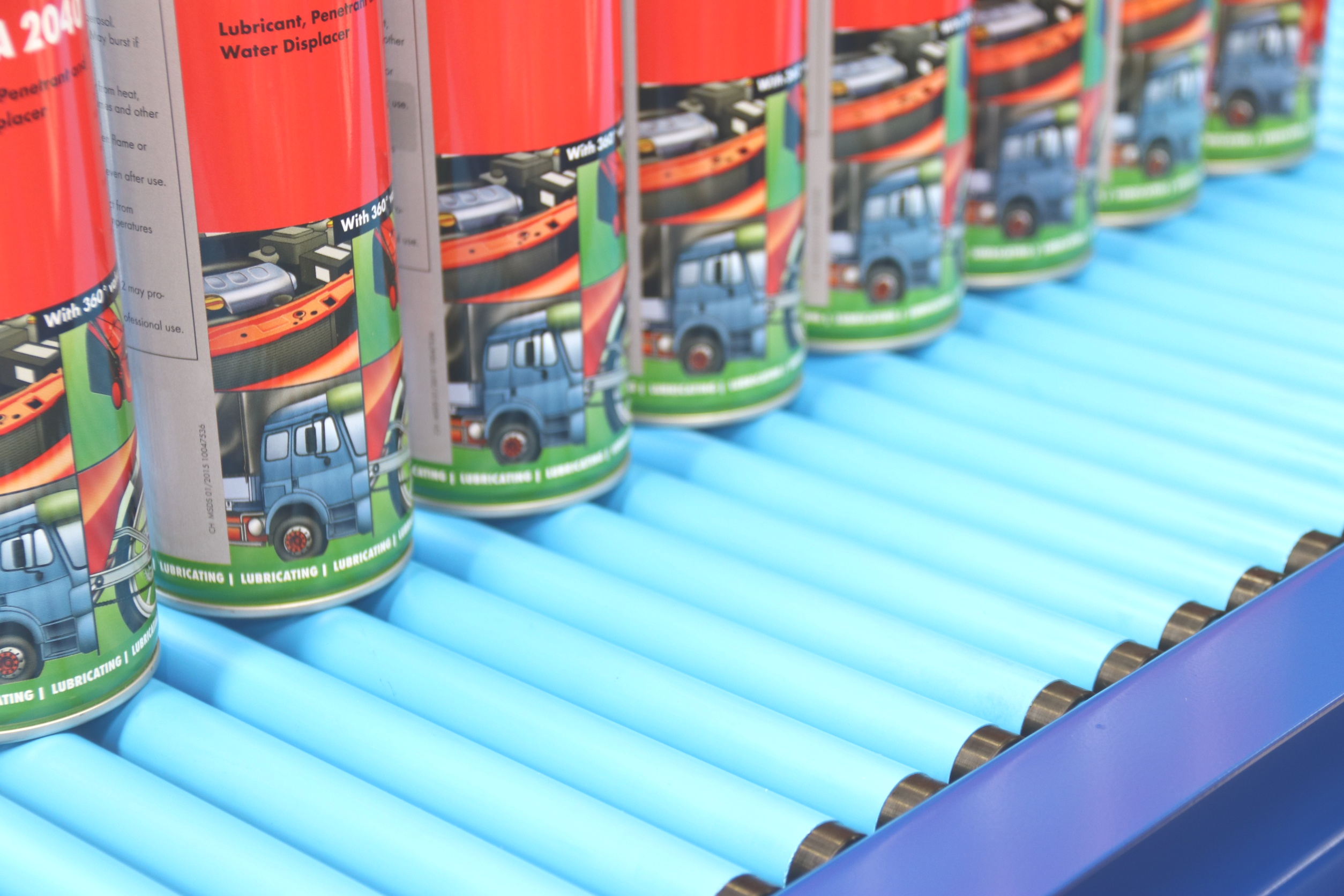
When dealing with diverse product sizes, there might be a need for controlling flow on gravity conveyors. While decreasing the conveyor angle is a practical approach, it may not always be feasible. Various methods can be employed to manage the speed effectively.
https://twitter.com/KBRMachinery/status/1397307013089071109/video/1
Incorporating a Skid Plate to the Rollers:
One effective method is incorporating a skid plate to the rollers. As the product moves over the plate, the resulting drag slows down the item. This approach provides a simple yet effective way of controlling flow on gravity conveyors, especially when handling lighter products that might otherwise move too quickly.
Decreasing the Conveyor Angle:
Another method is decreasing the conveyor angle. By reducing the slope of the conveyor, the downward force acting on the items is diminished, naturally slowing them down. Although this is a practical solution, it may not always be possible depending on the physical constraints of the conveyor setup or the available space in your facility.
Utilising Heavier Rollers:
Utilising heavier rollers is also a viable strategy. Heavier rollers are more resistant to turning due to their increased mass. Upgrading to these rollers prevents the items from exerting the same inertia, thereby slowing the conveyor. This method is particularly useful for controlling flow on gravity conveyors with products that have higher mass and might otherwise gain too much speed.
Employing Braked Rollers:
Employing braked rollers can be highly effective for managing the speed of items on the conveyor. These rollers come with internal gearing that generates a negative force, slowing down the roller. Braked rollers can be self-contained or added beneath a pair of rollers in a carriage. They are especially suitable for heavy items, such as those found on pallet conveyors, providing a controlled and steady flow.
Using Magnetic Conveyor Rollers:
For lighter products, magnetic rollers can be a great solution to decelerate roller conveyors. The number of magnetic rollers required depends on the weights and sizes of the products. Magnetic rollers offer a quick installation process and can decelerate items weighing up to 35 kg. This method provides another effective way of controlling flow on gravity conveyors, particularly for smaller, lighter items.

By implementing these strategies, you can ensure a smoother and more manageable process when controlling flow on gravity conveyors. Each method offers unique advantages, and the best choice will depend on the specific requirements of your operation, including product weight, size, and the existing conveyor setup.
For more information or quotes on gravity conveyors and parts, please contact us. Our team is here to help you find the best solutions for your needs. Whether you need advice on which method to choose or assistance with installation, we are here to support you every step of the way.